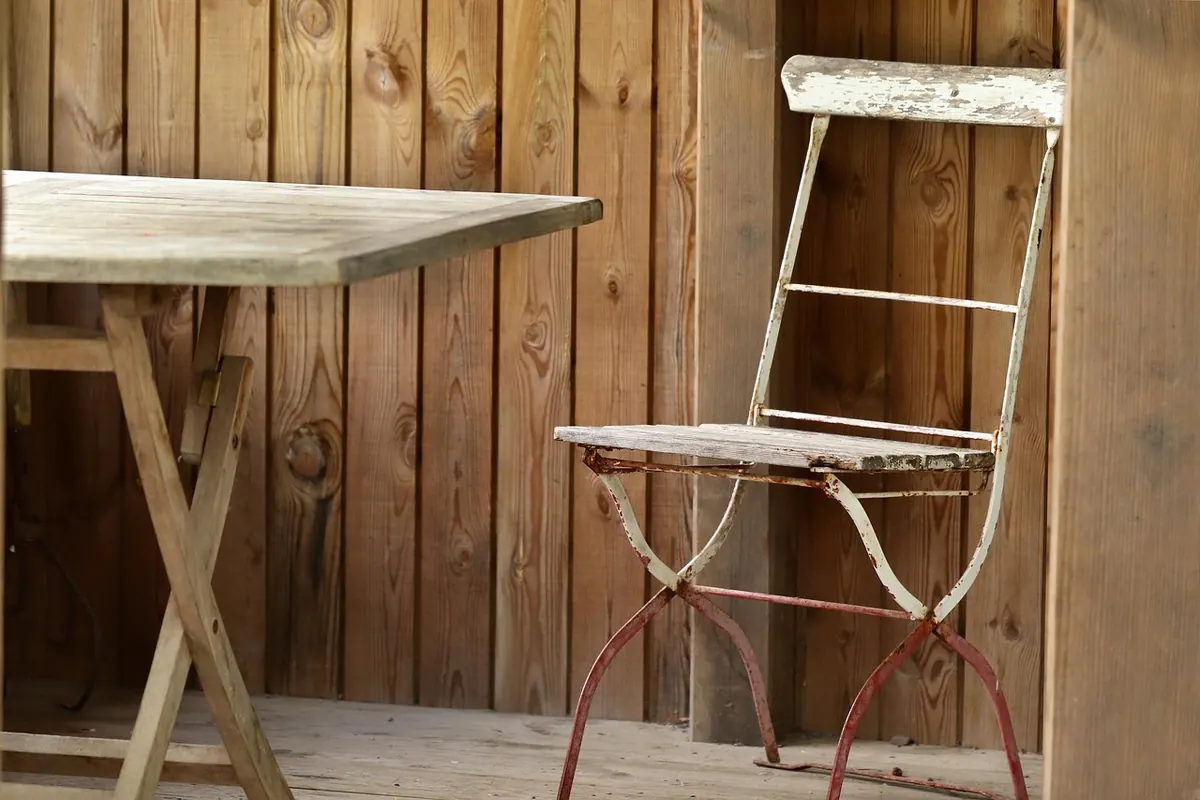
The river tells you spring is coming, and it rarely does so politely. A night of rain upstream, a rise of a few inches along the bank, and the bench you spent all summer in is suddenly sitting in the path of the water. Riverside furniture seldom fails because of one dramatic flood. It fails because of repeated soakings, silt worked into the joints, and a tether that was never quite tight enough. Two hours of preparation in late winter is usually the difference between a bench that comes through the season and one that ends up wedged against a fence two gardens downstream.
Read the water before you touch the furniture
Before deciding what to move, work out where the water actually goes. Sign up for the flood warning service for your area and check the forecast a week ahead rather than the morning of. Then walk the bank at high water — not in a flood, just a healthy rise — and look for the evidence the river leaves behind: silt lines on fence posts, flattened grass, strands of debris caught in a hedge, a tidemark of grit on paving.
The character of your river matters as much as the height. A flashy spate river can rise a metre in an hour after heavy rain on the hills, which gives you almost no warning at all. A slower river, a high tide or a saturated water meadow gives you hours, sometimes a day. If yours is the first kind, treat the rule as absolute: anything you can lift leaves the garden before the rain arrives.
It is also worth checking how your buildings and contents insurance treats garden furniture, sheds and outbuildings before the season starts rather than after. If anything about your cover or your property's flood risk is unclear, ask your insurer or a qualified surveyor instead of guessing.
Divide your seating into three groups
Group one is anything light: folding chairs, bistro sets, side tables, parasols and every cushion on the property. These come indoors. A shed standing on the flood plain does not count.
Group two is heavy but movable — a two-metre teak bench, a dining table, a swing seat. Move these to the highest, most sheltered corner of the garden, ideally onto hard standing where the ground will not turn to soup beneath the feet. Walk the route in advance, because discovering halfway that the gap between the greenhouse and the wall is too narrow is a miserable way to spend a wet afternoon.
Group three is fixed or simply too heavy to shift: cast concrete benches, cast-iron frames bolted to slabs, built-in seating. These stay, and they need anchoring.
One warning worth repeating: a loose bench in moving water is a battering ram. It can take out a fence panel, crack a retaining wall or block a culvert and push water towards your neighbour's door. Anything you cannot secure should be removed, not left to chance.
Moving and storing benches without damaging them
- Empty and dry first. Cushions off, trays out, frame wiped down and left to dry before it goes into a shed or garage. Damp wood and metal in a closed space grows mould quickly.
- Lift as a pair. Carry a bench at both ends. Dragging one by a single arm twists the frame and loosens joints.
- Separate unlike surfaces. A strip of cardboard or an old blanket between stacked metal and timber prevents scratching and galvanic corrosion.
- Store off the floor. Battens or pallets under stored furniture, especially in a garage or outbuilding that takes in water.
- Use a breathable cover. Plastic sheeting traps condensation underneath and does more harm than leaving the furniture uncovered in a dry corner.
If a bench is genuinely beyond safe lifting, or you have a heart or back condition, get help. A trolley and a second pair of hands cost far less than an injury in early March.
Anchoring what stays behind
Anchoring is about holding a seat down against buoyancy and stopping it drifting into the flow. A few principles are worth following:
- Set screw-in or auger ground anchors into firm ground, not soft silt, and use anchors rated for the load.
- Add weight low down — paving slabs laid over the feet work better than anything balanced on the seat, which makes a heavy object top-heavy and unstable.
- Keep tethers short. Slack lets a bench float, twist and slam; a short, firm connection keeps the feet where you put them.
- Never tie off to a living tree, a fence panel, a railing or a downpipe. None of them are designed for that load, and you will damage them trying.
- Use stainless steel A4 or hot-dip galvanised fixings. Mild steel near water rusts through in a couple of seasons.
If deep, fast water is a real possibility at your spot, anchoring is the wrong answer. Move the bench up the garden instead, and accept the inconvenience.
Materials, damp and the things that rot quietly
Teak, iroko, robinia, oak and good acacia all take wet weather well, particularly if they are oiled rather than varnished — a varnish film cracks, lets water in and traps it there. Powder-coated aluminium and recycled HDPE plastic cope with damp and flooding with very little fuss. Mild steel does not, and neither do cheap zinc-plated bolts.
Textiles are the quiet casualties. A damp cushion left in a shed in March will grow mould within a fortnight, and parasols, ties, seat pads and fabric hinges are all better off indoors until the worst of the spring rain has passed. Store them clean and bone dry, and do not fold a canvas cover away wet.
After the water drops
Wait until the water is genuinely off and the ground has firmed before you wade in. Assume floodwater has carried something unpleasant with it — silt, sewer overflow, agricultural run-off. Wear gloves and boots, wash your hands afterwards, and keep children and pets away from the affected area until it has been cleaned. For anything significant, follow local authority or public health guidance.
Rinse silt off with a hose and a soft brush using warm water and a little mild soap. Avoid a pressure washer at full force on older timber, which lifts the grain and opens cracks. Let everything dry thoroughly in the sun before re-oiling. Then check the details: loose bolts, rust blooms, splits in the timber, welds on metal frames, and the ground itself — scour around the feet, hollows, cracked slabs. Re-bed anything that has shifted before you sit on it.
The two-hour spring reset
- Sign up for flood warnings for your stretch of river and watch the forecast a week out.
- Walk the bank at high water and mark the line with a peg or a dab of paint on a fence post.
- Bring cushions, parasols and light chairs indoors.
- Move heavy benches to high, firm ground — or anchor them properly where they stand.
- Replace rusted fixings with stainless or galvanised ones.
- Re-check anchors and joints after every rise, and again in late April.
None of it is glamorous work. But a bench that is dry, sound and sitting in the right place is the whole point of living beside water. Do it on a bright, cold morning in late winter and you will spend the spring sitting down rather than scraping silt out of teak.
Photo: pepperminting / Pixabay