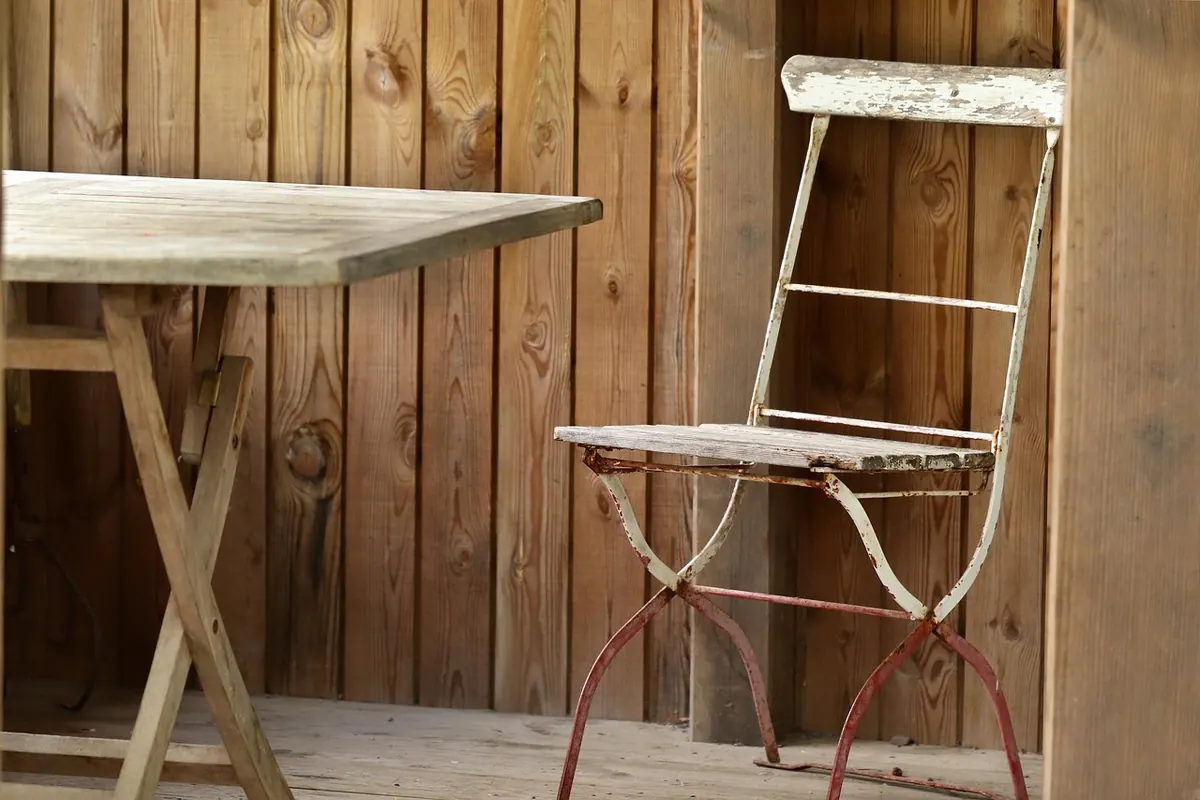
A garden that runs down to a river or stream has something a suburban lawn cannot match: moving water, herons, the smell of wet stones after rain. It also has mist on still mornings, dew that lingers past breakfast and soil under the patio that never quite dries out. Furniture that survives a dry summer elsewhere often looks tired here within a couple of seasons.
The encouraging part is that riverside conditions are predictable. Once you understand what damp air, shade and occasional high water do to timber, metal and fabric, choosing pieces becomes a series of clear decisions rather than guesswork.
What riverside conditions actually do to furniture
Close water changes the air as much as the ground. Humidity stays higher, dew forms more heavily, and anything facing the river remains wet well into the morning. Timber swells, dries, then swells again. Steel develops rust at every scratch. Cushions left out overnight feel clammy for days afterwards.
Four pressures are worth planning around:
- Persistent moisture. Not a soaking, just a film of damp that never fully clears — the ideal condition for mould, mildew and rot.
- Shade and algae. Banks are often shaded by trees, and shaded surfaces stay wet longer. Green algae builds up on timber and paving, making both slippery.
- Wind funnelling. Rivers act as channels. A light chair in an exposed garden can end up in the water.
- Changing water levels. Even without a flood, winter levels rise. Silt, debris and standing water leave their mark on anything sitting low to the ground.
Materials that cope with wet air
Some materials take damp in their stride. Others quietly fall apart. These are the ones worth your money.
Durable hardwoods
Teak, iroko, robinia and eucalyptus are long-standing choices for good reason: dense, naturally oily timber that resists rot and insect attack. Left untreated, most will weather to a soft silver-grey that suits a riverside setting well. Oiling keeps the original honey colour but needs repeating, and in a damp garden it also helps slow surface mould. Look for close, tight joints and stainless fixings rather than thin, hollow-sounding timber.
Powder-coated aluminium
Aluminium does not rust, and a decent powder coat protects it from everyday knocks. It is light, which helps enormously when you need to shift things before a flood warning, but lightness also means it can blow over. Choose frames that feel solid, and touch up chips in the coating promptly — bare aluminium behind a damaged finish looks shabby rather than rustic.
Recycled plastic and resin weave
High-density polyethylene furniture — the heavy recycled kind that mimics painted timber — ignores water completely. It does not rot, splinter or need oiling, and it holds its colour reasonably well. Resin weave over an aluminium frame gives you the look of rattan without the rot. Natural rattan, by contrast, belongs indoors.
What to avoid
Untreated softwood, MDF and particleboard have no place outdoors here. Painted mild steel rusts from the inside once water creeps under the coating. Wrought iron looks charming until rust bleeds onto your paving. Be wary, too, of legs that are actually steel sleeves disguised as wood: they trap water at the joint, which is exactly where failure begins.
Raise the base and keep the air moving
The single most effective change you can make is getting furniture off the ground. Water wicks upwards through timber and pools in the joints of metal frames, so a gap of 25–50mm under every leg makes a genuine difference. Feet, plinths, castors or simply a hard, free-draining surface all achieve the same thing.
Work through these steps when you plan a seating area:
- Watch the garden in heavy rain. Note where water runs, where it stands and where it lingers longest. Avoid those spots.
- Choose a free-draining base. Paving, gravel or a raised deck all beat soil, grass or bark chippings, which stay wet and harbour mould.
- Lift everything clear. Add feet or risers so no part of the furniture touches the ground.
- Leave gaps between pieces. Air needs to move around and behind a bench, not just under it.
- Keep planting back. Shrubs and long grass against a bench hold moisture on the frame and hide the first signs of rot.
- Check the levels. A paving slab that tilts towards the seat will funnel water straight into the joints.
If you are building a raised deck or platform in a floodplain, it is worth checking with your local council and your home insurer before you start. Requirements vary, and a quick call now saves a difficult conversation later.
Cushions, covers and the small details
Cushions are where riverside gardens are won or lost. Look for solution-dyed acrylic covers, which hold their colour and resist mildew, and quick-drying foam or mesh cores rather than solid blocks that hold water like a sponge. Even so, the habit that matters most is bringing cushions indoors overnight and during wet spells. A ventilated storage bench is far better than a sealed plastic box, where trapped damp turns fabric musty within days.
Covers should breathe. A cheap plastic cover that traps condensation can do more harm than no cover at all. If you use one, make sure the furniture underneath is dry before it goes on, and lift the cover on dry days to let air through. For mould on frames or fabric, a mild soap solution and a soft brush usually does the job; rinse and dry thoroughly afterwards.
Wind, high water and where things live
Rivers funnel wind, and the wind arrives with nothing to slow it down. Weight is your friend: heavy recycled plastic and dense hardwood stay put when lighter pieces take flight. Stackable chairs can be moved into a shed in minutes, and anything on castors is easy to wheel to higher ground. Avoid tying furniture to fences or railings that could themselves be damaged by fast-rising water.
If your garden floods occasionally, treat everything below the usual winter level as temporary. Keep the permanent furniture on the highest practical terrace or deck, and store the rest. After any flooding, hose silt off frames and fabric before it sets, then dry everything fully in the open air rather than stacking it away damp.
A simple upkeep routine that works
Riverside furniture rarely needs much, but it does need attention at the right moments. In spring, wash down frames and check every joint, fixing and foot for softness or rust. Re-oil hardwood if you want to keep its colour. In autumn, clear fallen leaves from slatted tops and around legs, store cushions, and move anything vulnerable above the winter water line. Through the year, a monthly glance at the underside of tables and benches will catch problems while they are still small — a soft patch of timber or a bubbling patch of coating is easy to treat in May and expensive to ignore until November.
Choose materials that tolerate damp, raise them clear of the ground, let the air move, and keep soft furnishings under cover. Do those four things and your riverside seating will still be worth sitting on when the herons come back.
Photo: Nennieinszweidrei / Pixabay