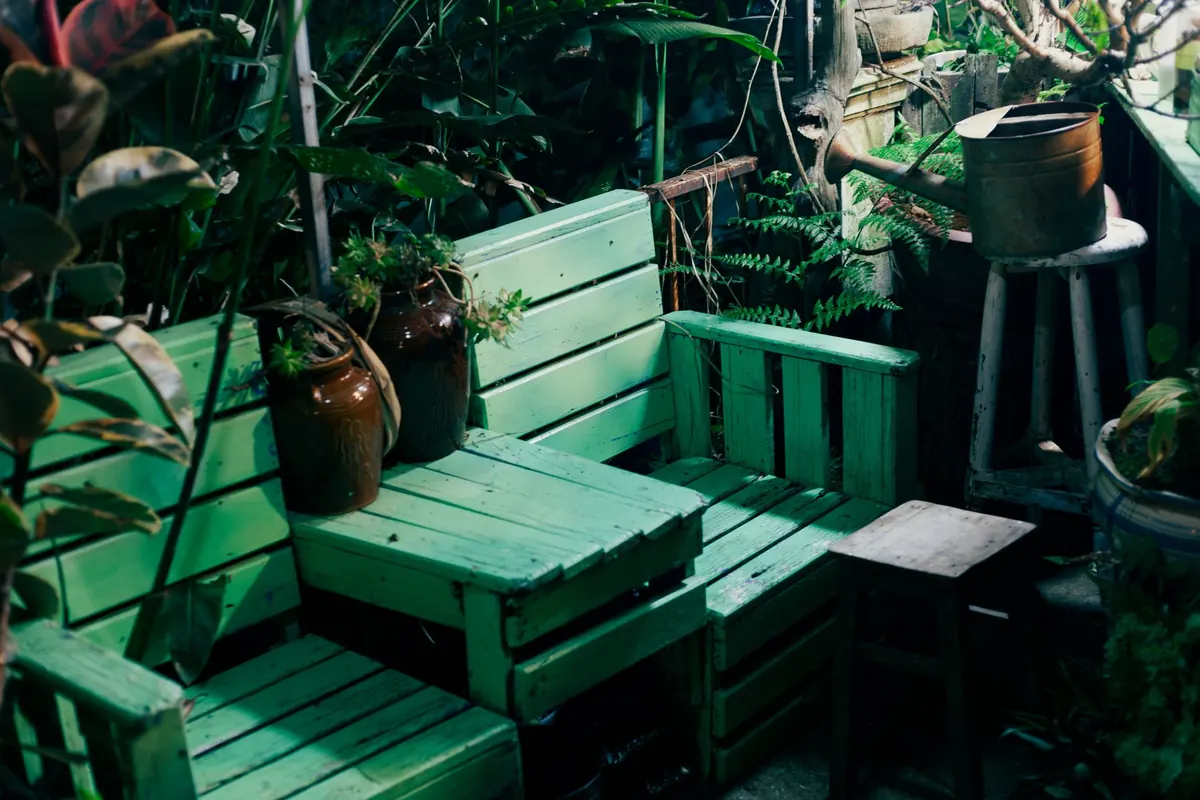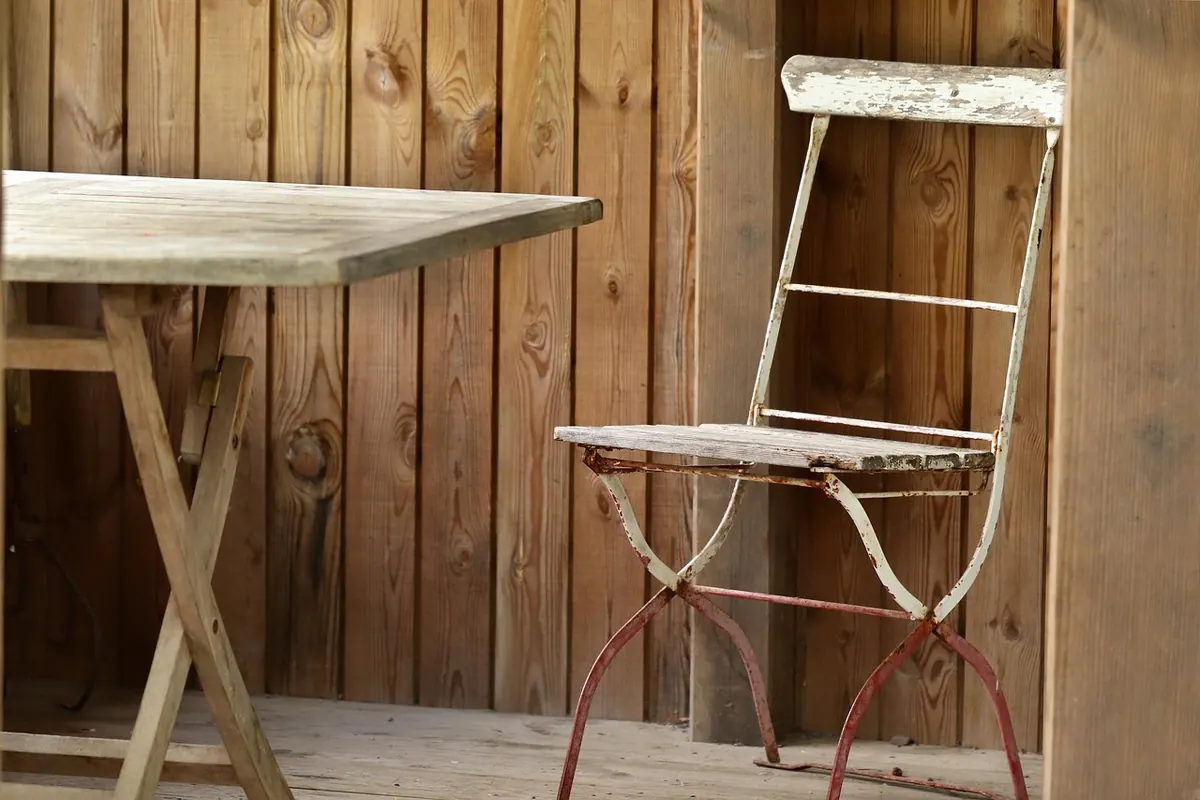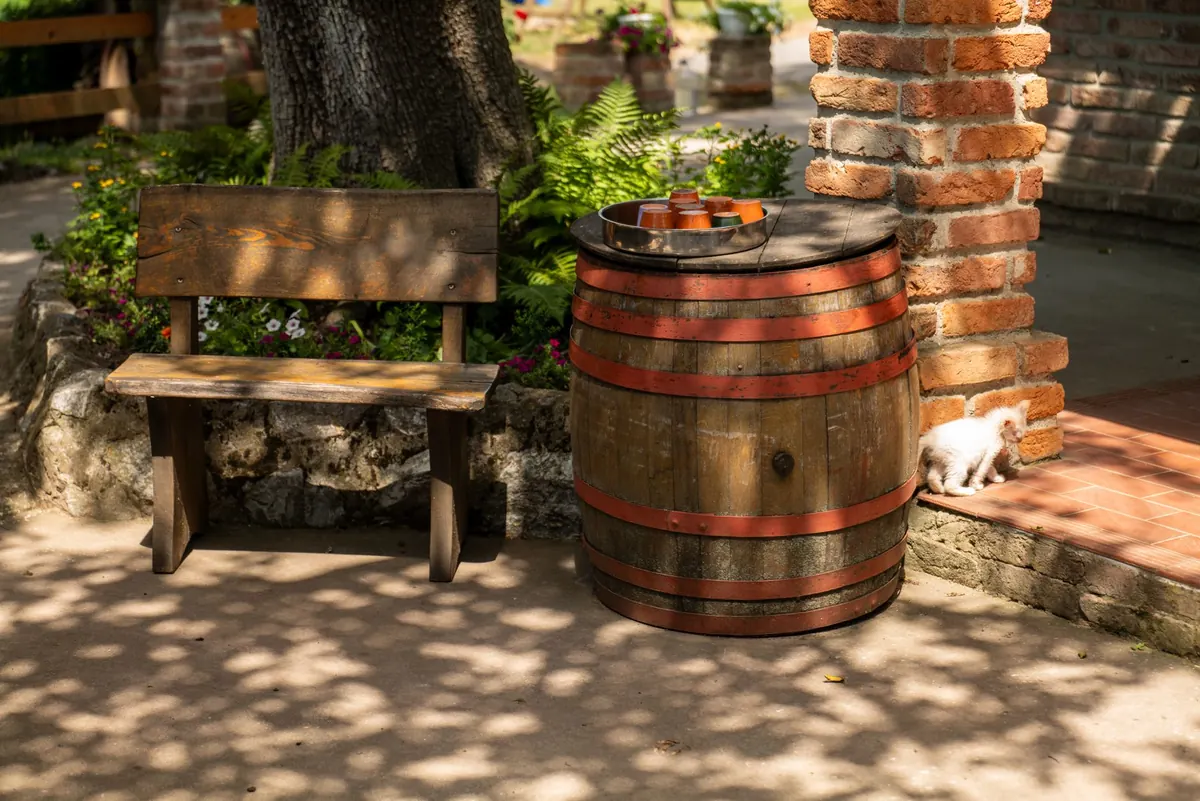
Most small patios are a compromise. There is a bit of paving, a step, a shrub with ambitions, and a table that only works if nobody needs to walk past it. Add a garden bench and the space can tip from cosy to cramped in an afternoon. The reassuring part is that this is a measuring problem rather than a taste problem, and it takes about ten minutes with a tape measure, a pencil and something to mark the paving with.
Measure the patio, not the gap you think you have
Start with the space that is genuinely free. Walk the patio with a tape measure and note the clear paved width and length, ignoring the pots you intend to move, the barbecue that never quite goes away, and the strip of gravel where nothing grows. If your patio is L-shaped or narrows towards the lawn, measure the tightest point rather than the widest. That pinch point decides what will fit.
Then sketch it. A rough plan on the back of an envelope is enough: doors, step edges, drain covers, downpipes, the outdoor tap, the spot where the sun lands at six in the evening. Chalk or masking tape is useful here. Tape out a rectangle the size of the bench you are considering and live with it for a day. It is far easier to move a strip of tape than a 130cm piece of teak.
Clearance: the numbers that keep a patio usable
A bench that fits is not the same as a bench that works. The difference is the space around it, and this is where small patios go wrong. As a working guide:
- 60cm — the minimum for one person to walk past a seated pair without turning sideways. Tight, but it functions.
- 90cm — comfortable passing room, and enough space to pull the bench forward when you want to sweep behind it.
- 100–120cm — worth having if this is the only route from the back door to the lawn, or if you carry trays out from the kitchen.
- At least 40cm in front of the seat — so people can stand up without colliding with a table or a wall. Below that, sitting down becomes a puzzle.
Doors need thinking about too. A back door needs close to a metre of clear space in front of it to swing open fully, and a bench parked inside that arc is a bench you will resent by August. Fold-down tables and folding seats complicate things further: measure the whole thing open, not closed.
Sizing the bench itself
Width
Two-seater garden benches generally run from about 120cm to 135cm across, three-seaters from 150cm upwards. The figure that matters, though, is the internal seat width — the space between the armrests. Allow roughly 55–60cm per person for comfortable sitting; below about 50cm each, shoulders and elbows start negotiating.
This is why a 110cm bench without armrests can seat two more happily than a 120cm bench with chunky arms. If a listing only gives an overall width, assume the armrests and frame steal 15–25cm of it. Where two people will sit regularly, look for an internal width of around 110–120cm.
Depth and height
A seat depth of 40–50cm suits most adults; anything deeper and shorter sitters end up perched on the front edge with nothing behind them. Seat height usually falls between 43cm and 45cm, roughly dining chair height — worth checking against a chair you already own. Lower seats feel more relaxed, but they are harder to get out of.
A backrest angled slightly backwards, somewhere around 100–110 degrees from the seat, is kinder than a bolt-upright design. On a small patio, a bench with a back reads clearly as a place to sit; a backless bench is more versatile, tucking under a table or a windowsill when not in use.
Weight and moving day
Ask yourself whether you can lift one end on your own. Cast aluminium and folding timber models are manageable; solid hardwood benches often are not. You will need to move it for cleaning and for winter storage, so plan the route now: side gate, steps, shed door. A bench that stays outside all year wants feet that will not sit in standing water.
Shapes that earn their keep
On a compact patio, the shape of the bench matters as much as the size. Some options work harder than a standard straight bench:
- Corner or L-shaped seating uses the awkward angle where two walls or fences meet, seating two or three people in space that was never going to hold anything else.
- Bench and table combinations, where the bench slides under a small bistro table — two functions, one footprint.
- A storage bench keeps cushions dry without taking up extra room, though the lid needs clearance to open.
- A wall-mounted fold-down seat for balconies and narrow courtyards, where 30cm of depth is the whole budget.
- A backless bench along a wall, which can double as a low table for drinks when the chairs come out.
Whatever you choose, resist the urge to fill every centimetre. Leaving one gap — between the bench and the door, say — makes a small patio feel bigger than it is.
A ten-minute check before you buy
- Measure the clear paved area, including the tightest point.
- Tape or chalk the bench footprint on the ground, then add 90cm of walking space in front of it and see what is left.
- Check the internal seat width in the product details, not just the overall width.
- Stand a dining chair on the patio and sit on it to test a 43–45cm seat height.
- Walk the delivery route from the front gate to the patio, including gate widths and any steps.
- Decide where it will be stored or covered in winter, and who will move it.
If it is a close call, go smaller
Small patios punish optimism. A bench 10cm narrower than you imagined will be used every sunny evening; a bench that technically fits but leaves you edging past it with a mug in each hand will end up pushed against the fence with a watering can on it. Buy for the way you actually use the space — a two-seater that sits easily under a window, or a corner arrangement that grows with the garden — and the patio will feel generous rather than squeezed. Measure twice, sit once.
Photo: Vladimir Srajber / Pexels