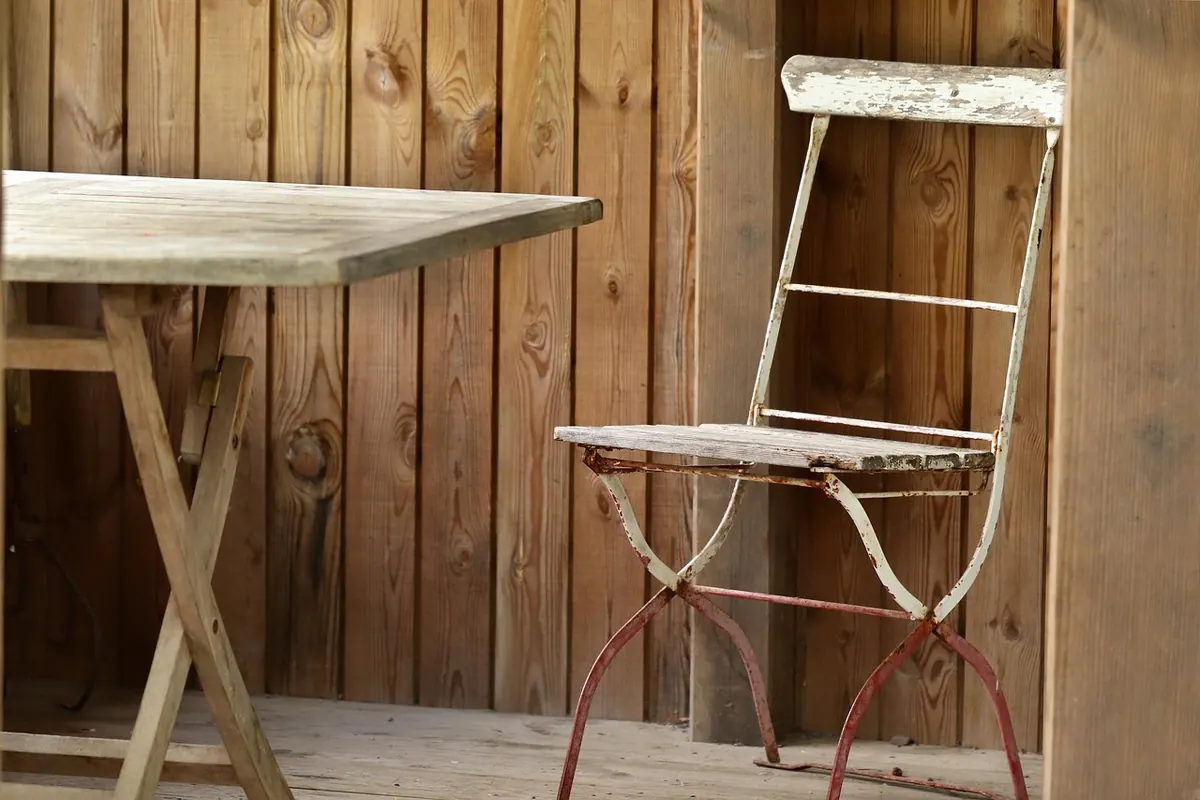
Wind is the quiet spoiler of a British garden. You can buy beautiful furniture, choose a sheltered-looking corner and still find yourself holding onto your glass on a blustery Tuesday in May. The trouble is rarely the furniture itself. It is where the furniture sits, how heavy it is and what surrounds it. Get those three things right and a breezy plot becomes somewhere you actually want to spend an afternoon.
Below are the mistakes that come up again and again, along with practical fixes you can try this weekend.
Placing Seats in the Open Middle of the Garden
The most common error is treating the centre of the lawn as the natural home for a table and chairs. It looks tidy in a photograph, but on an exposed site it is the worst position available. Wind accelerates across open ground, and a seating group in the middle of it has nothing to break the flow.
Watch your garden on a gusty day before you commit to a spot. You will usually notice that the wind funnels down one side, often along a fence line or between a house and a hedge, while other areas sit noticeably calmer. Put your seating in the calm zone, even if it feels less obvious or means a slightly longer walk from the kitchen door.
Corners work well, but only when they are the right kind of corner. A nook formed by two solid boundaries catches and swirls wind. A nook formed by one solid boundary and a porous one, such as a hedge or slatted screen, tends to be far more comfortable.
Underestimating Lightweight Furniture
Rattan-effect chairs and slim aluminium bistro sets are easy to move and easy on the eye. They are also easy for a gust to lift, slide across a patio or tip onto a planted border. If your garden is exposed, weight matters more than you might expect.
You do not need to buy the heaviest set on the market. You need furniture that either has enough mass to stay put or can be anchored sensibly. A few options worth considering:
- Choose denser materials for permanent positions: teak, acacia, eucalyptus and cast aluminium all resist movement better than hollow tubular frames.
- Add weight low down. A heavy base under a parasol, or a filled planter tucked beside a chair, makes a surprising difference.
- Use stackable pieces strategically. Stack lighter chairs against a wall when not in use rather than leaving them scattered across an exposed lawn.
- Fix what you can. Bolt bench legs to a paved base where practical, and use furniture feet or pads that grip rather than glide.
- Store or strap down in winter. Lighter sets should be brought inside or secured before autumn gales arrive.
Parasols deserve their own warning. An open parasol in a gust acts like a sail, and a poorly weighted base will not save it. Close it when you leave the garden, and consider a cantilever model you can position behind a wall rather than above an open seating area.
Ignoring the Difference Between Shelter and Blockage
Many gardeners respond to wind by building the tallest, most solid barrier they can. This often backfires. A solid fence or wall forces air upwards and over the top, and it then drops down on the sheltered side with extra turbulence. The result is a patch of swirling air right where you wanted to sit.
Porous barriers work better. Roughly speaking, a screen that lets some air through, such as a slatted fence, woven hazel hurdle, trellis with climbers or a dense hedge, slows the wind rather than deflecting it. The sheltered zone behind it is longer and calmer.
Think about height too. A barrier only protects an area roughly its own height downwind before the effect fades. If you want to shelter a dining table four metres from the boundary, a knee-high fence will not do the job.
Layering works better than one big wall
Two or three staggered barriers at different heights and distances break up airflow far more effectively than a single tall structure. A low planter row, then a mid-height screen, then a tree canopy above gives you gentle protection across a wider area. It also looks better than a fortress fence.
Forgetting That Wind Comes From More Than One Direction
British gardens rarely have one prevailing wind all year. A corner that feels still in July can be miserable in February when the direction shifts. If your seating is fixed to a single spot, test it across a few months rather than a single afternoon.
A practical approach is to plan two seating zones: a main one for the warmer months and a smaller, more enclosed spot for cooler weather. A bench against a south-facing wall, tucked behind a shrub, often gets far more use in spring and autumn than a grand dining set on an open patio.
Overlooking Small Details That Make a Big Difference
Once position and furniture are sorted, the finishing touches matter more than people expect. Loose cushions, lightweight tablecloths, unsecured trays and open umbrellas all turn a pleasant lunch into a chase across the lawn.
Consider the surface beneath your seating as well. Gravel is noisy and shifting in wind, and lighter chairs can skate across smooth porcelain paving. A textured paving slab or a small decked platform gives better grip and feels more settled underfoot.
Planting helps enormously here. Grasses and low shrubs around the edges of a seating area filter wind at ground level, where it is most noticeable around your ankles. They also soften the look of a hard landscape. Just keep taller, whippy plants far enough back that they do not whip against the furniture or your guests.
A Short Checklist Before You Commit
- Spend twenty minutes in the garden on a windy day and note where you feel the wind most and least.
- Choose a position with at least one porous barrier upwind, not just a solid wall.
- Match the furniture's weight and material to how exposed the spot really is.
- Secure parasols, cushions and lightweight tables, or plan to store them.
- Test the spot in two seasons, not one afternoon.
Getting It Right From the Start
A windy garden is not a garden you cannot use. It simply asks for a bit more thought about where things go and what they are made from. Move the seating out of the open, choose furniture with some substance, and build shelter in layers rather than one blunt wall. Add a few low plantings to take the edge off ground-level gusts, and keep anything that can fly away well secured.
Do that, and the wind becomes background noise rather than the reason you retreat indoors. If you are planning a larger structure such as a pergola, gazebo or significant boundary wall, it is worth checking with your local planning authority first, as rules vary depending on height, position and property type.
Start with the position. Everything else gets easier once the seating is sitting in the right place.
Photo: LAWJR / Pixabay